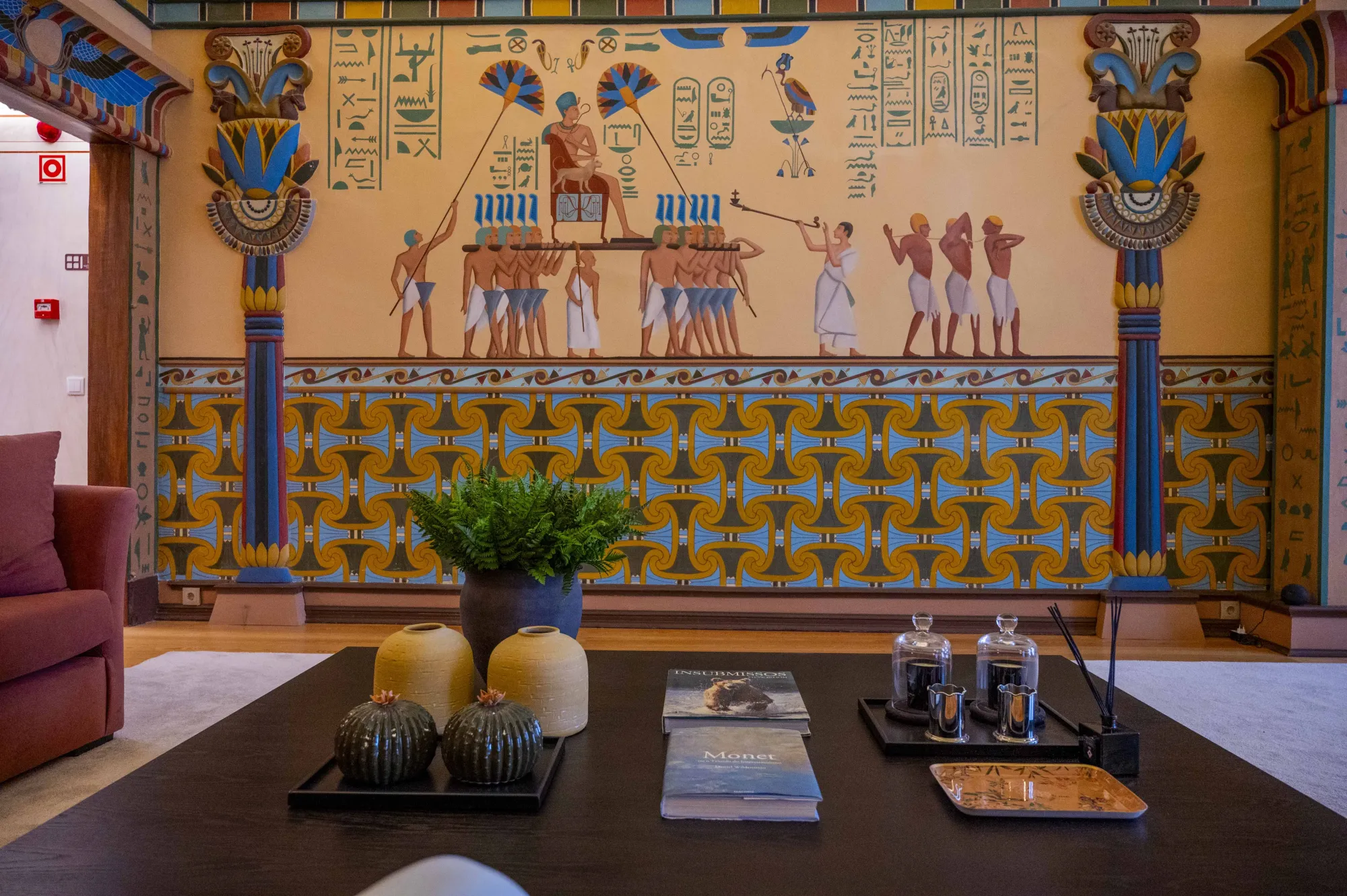
A room that exists nowhere else
On the first floor of a historic house on Rua do Souto lies an entirely Egyptian room. Walls and ceiling covered in hieroglyphs, figures and ornaments, hand-painted in 1937 by Braga artist Lúcio Fânzeres.
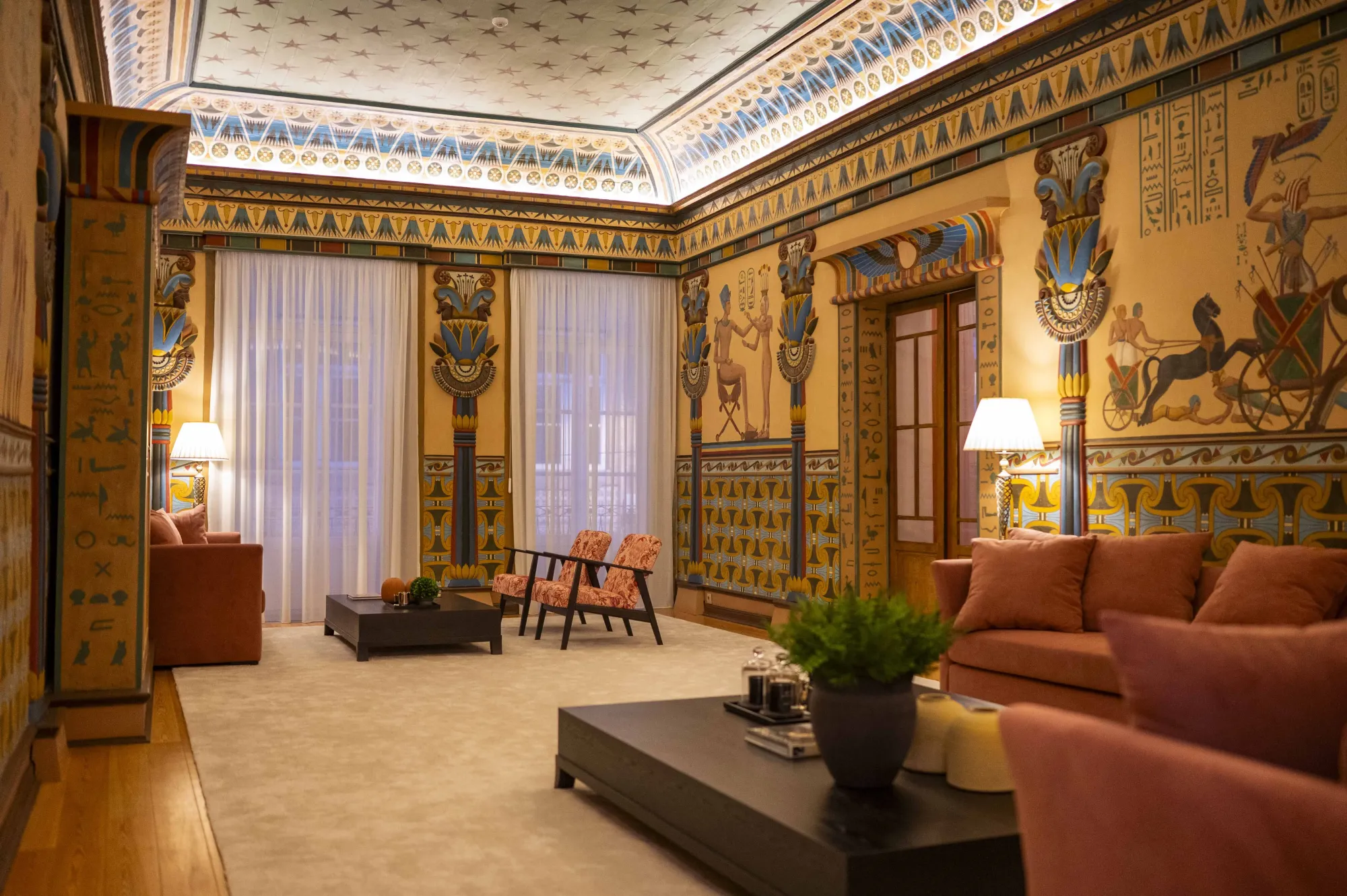
Ramesses III, painted in Braga in 1937
Fânzeres did not invent; he copied. The scenes reproduce the temple of Ramesses III in Luxor, as German Egyptologist Richard Lepsius recorded it in the 19th-century engravings of Denkmäler aus Aegypten und Aethiopien. The result is a rare example of revivalist Orientalism, the movement that shaped Portuguese decorative arts in the first half of the 20th century, and one of the last to survive in the country.
From neglect to protection
For decades, the room served as the social hall of the Commerce Workers' Union. Then the building closed and fell into decay, and the Salon risked being lost. In 2006 the national heritage institute (IPPAR) publicly pledged it would not be destroyed, and in 2014, after years of campaigning by heritage associations, Braga City Council moved to protect it.
Returned to its original beauty
Its rescue was a meticulous work of conservation and restoration that returned the Salon to its original aesthetic and preserved it for generations to come. The images speak for themselves.
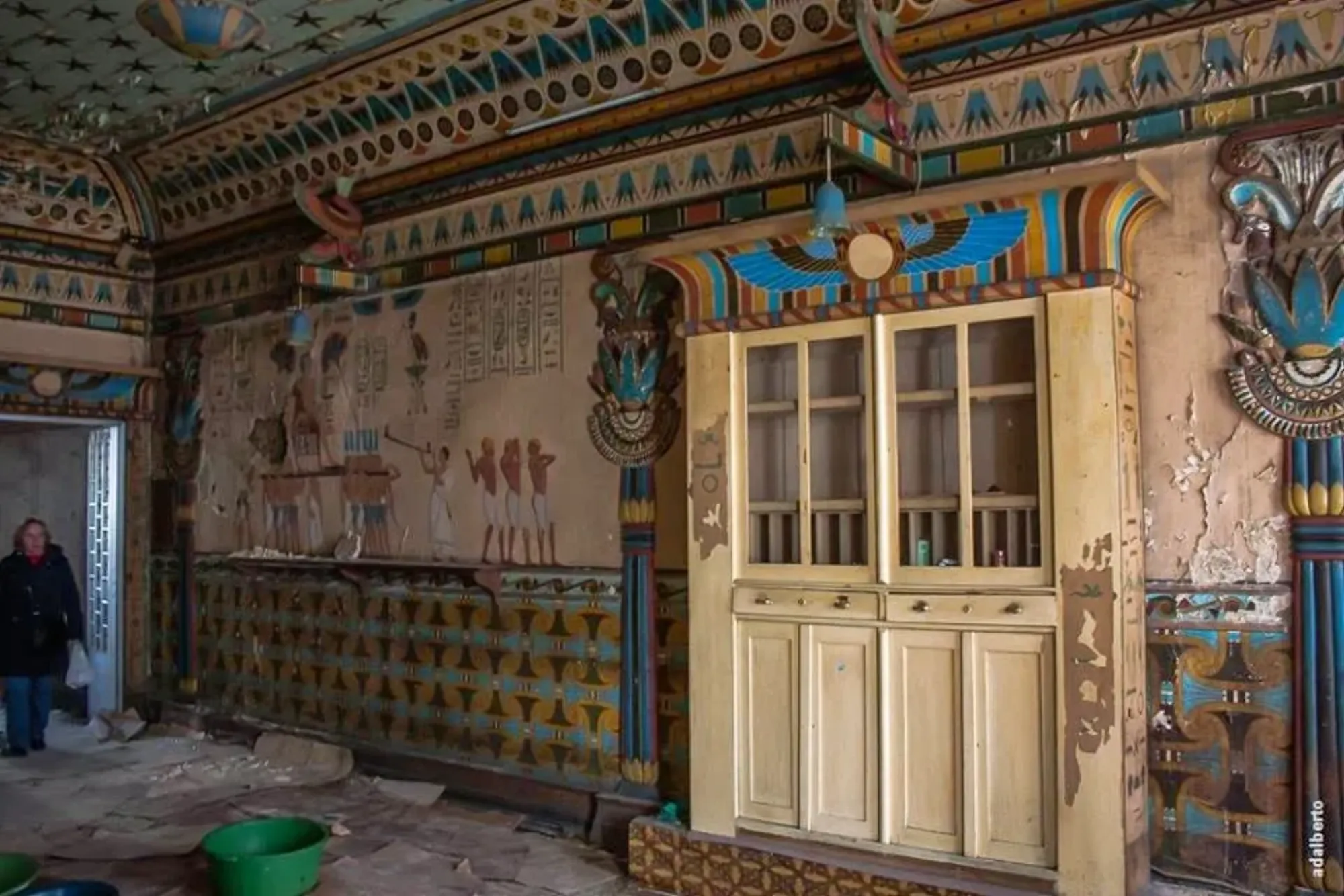
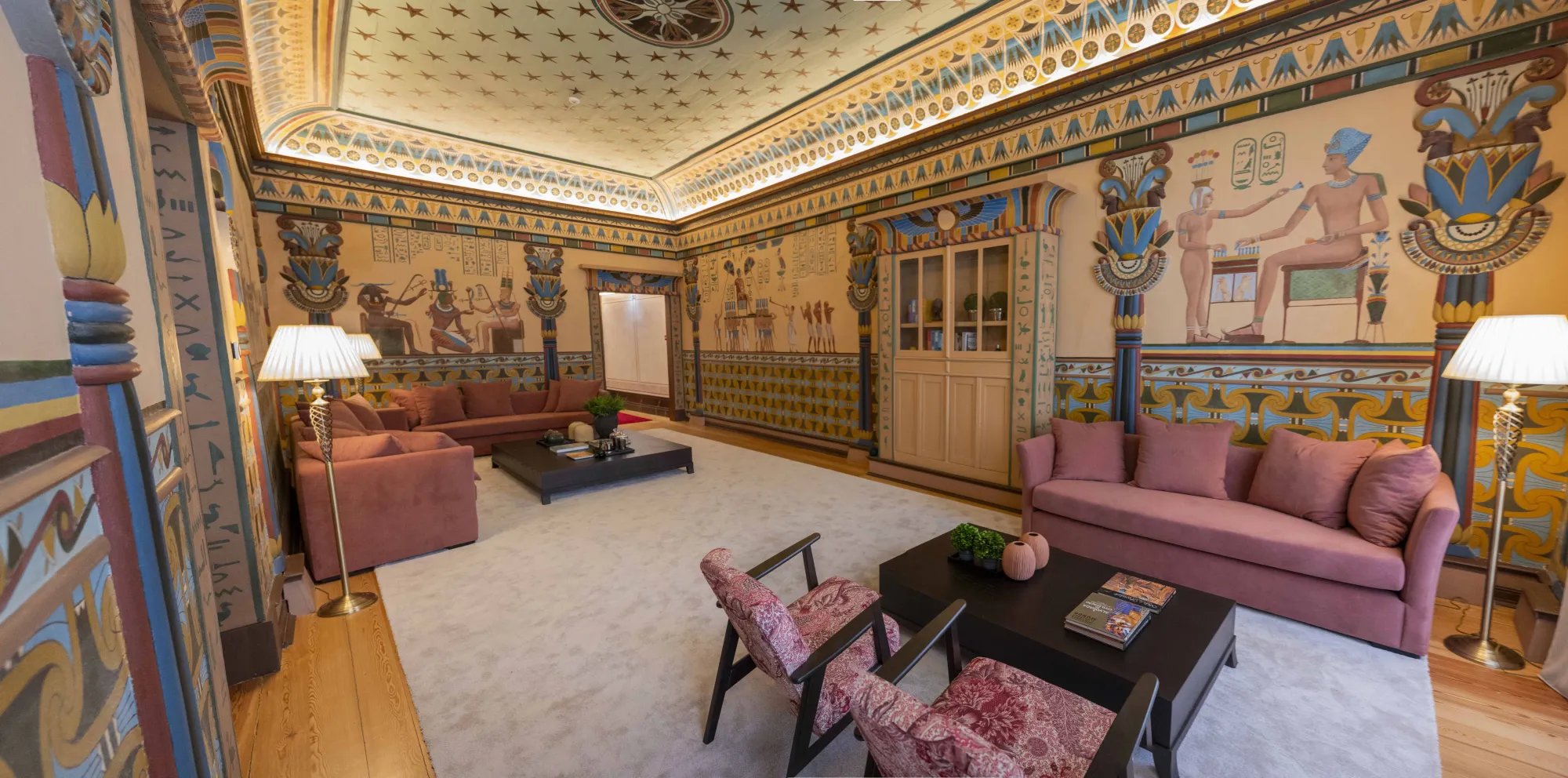
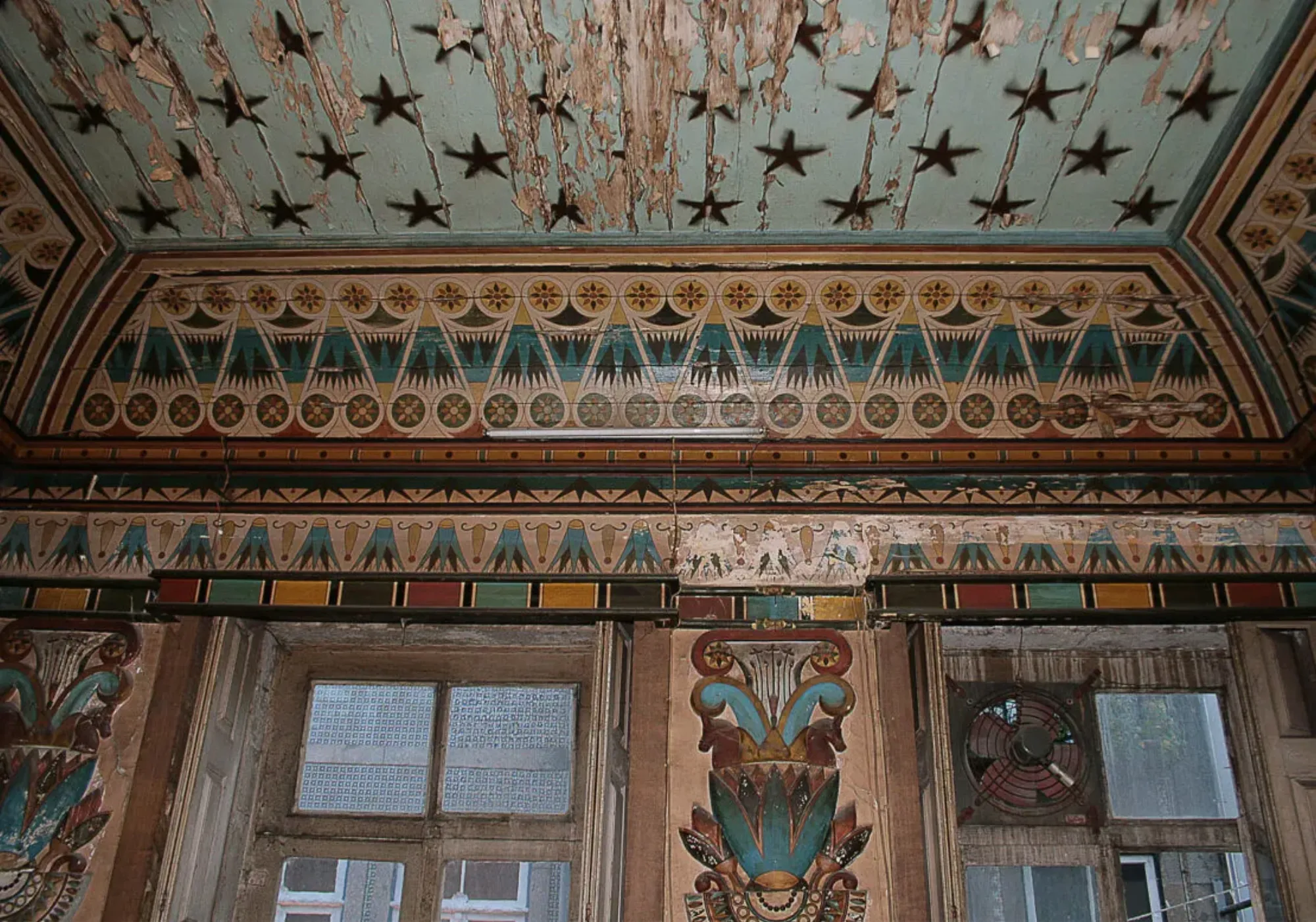
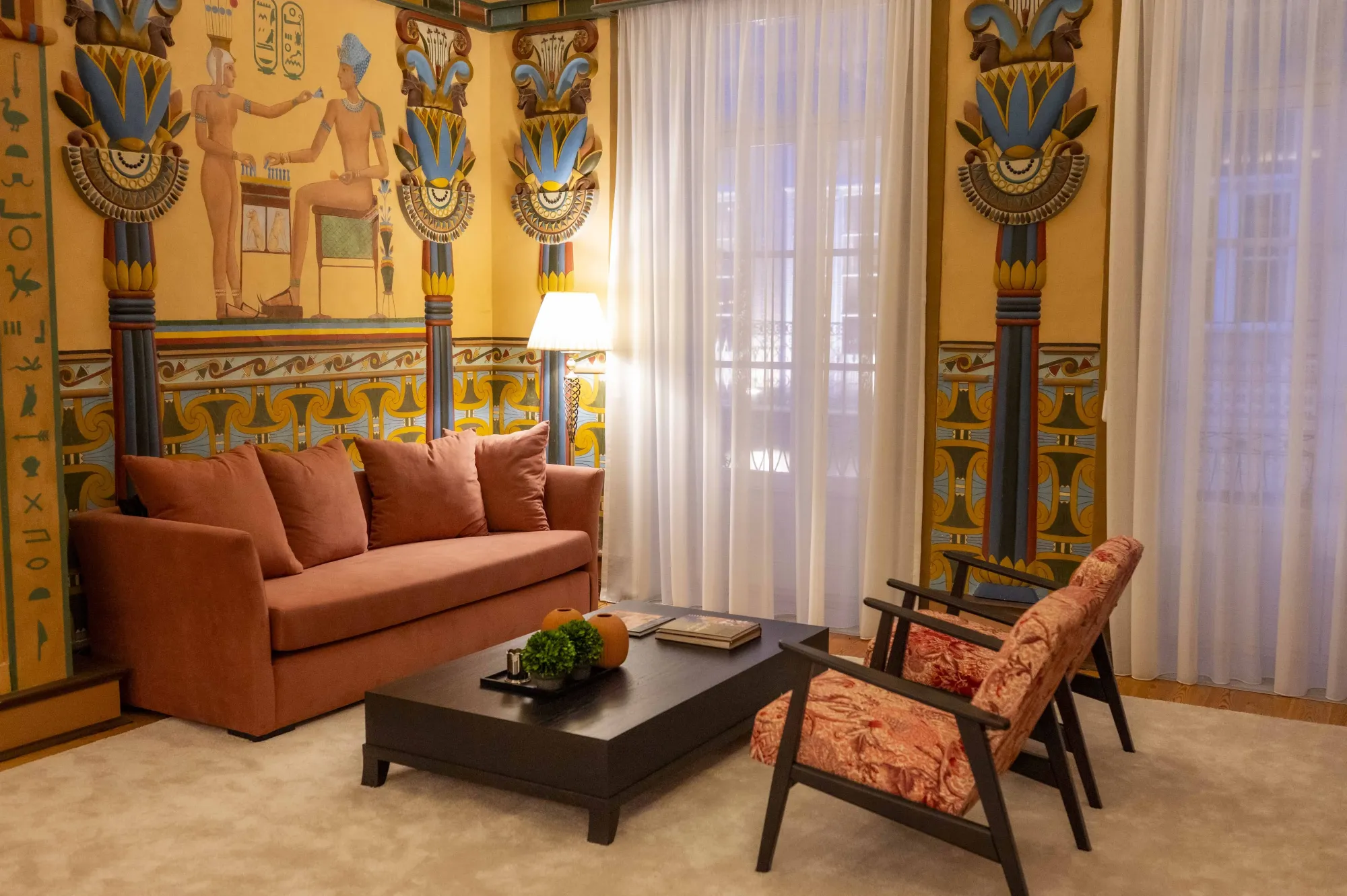
The same space, before and after the restoration.